Why Is My AC Not Cooling?
Few things are more frustrating on a hot day than hearing your AC run while the temperature inside keeps climbing. Sometimes the cause is simple, such as an incorrect thermostat setting or a dirty air filter. Other times, poor airflow, refrigerant issues, or a failing component may be keeping the system from cooling properly.
A few basic steps can help narrow down the problem before you schedule a repair. Start with the thermostat, filter, and outdoor unit, then watch for warning signs such as weak airflow, frozen coils, or repeated breaker trips. If the issue goes beyond basic troubleshooting, Mendel Plumbing and Heating provides AC service throughout St. Charles, Batavia, Geneva, and surrounding Fox Valley communities. The key is knowing when a simple adjustment may solve the problem and when continuing to troubleshoot could make things worse.
Common Signs Your Air Conditioning System Isn't Cooling
When an air conditioner starts losing cooling power, the problem can show up in several ways. The air coming from the vents may feel warmer than usual, airflow may seem weaker, or certain rooms may stay noticeably hotter than others. In some homes, the AC keeps running for long stretches but never reaches the temperature set on the thermostat.
Weak airflow may point to a dirty filter, blower problem, or duct issue, while uneven temperatures can suggest that conditioned air is not moving through the home efficiently. An AC that runs almost constantly may be dealing with restricted airflow, low refrigerant, or excessive heat gain — or it may simply be undersized for the space.
Frost or ice on the evaporator coils or refrigerant lines points to a problem that needs prompt attention. A frozen AC cannot cool properly, and continuing to run it can place additional strain on the equipment. If you notice this buildup, see the frozen coil steps below before running the system again.
Knowing when the cooling problem began can help narrow the possibilities. If your AC cooled the home normally until recently, a maintenance issue, duct or filter problem, or failing component is more likely than improper system sizing. Equipment that has struggled since installation may point toward sizing, ductwork, or other issues with the home's overall cooling setup.
Quick DIY Checks Before Calling a Professional HVAC Technician
Some of the most common causes of poor cooling are easy to rule out without opening the equipment or attempting a repair. The thermostat, filter, and outdoor unit are reasonable places for a homeowner to start, and checking them may reveal the problem before professional service is needed.
Check the Thermostat
Make sure the thermostat is set to “Cool” and that the target temperature is lower than the current room temperature. It sounds basic, but an accidental setting change can leave the fan running without actually calling for cooling. If the display is blank, dim, or unresponsive, replace the batteries if your thermostat uses them and see whether the AC responds.
If the thermostat appears to be working but the AC still does not start cooling, look at the circuit breaker. Turn the thermostat off first, reset the breaker, then return the thermostat to “Cool.” If the breaker trips again, stop there rather than repeatedly resetting it. Recurring trips can indicate an electrical problem.
Older thermostats can lose accuracy over time. If the room feels much warmer than the temperature shown on the display, or the equipment cycles unpredictably, the thermostat itself may need recalibration or replacement.
Check the Air Filter
A dirty air filter can do more than reduce airflow at the vents. As dust and debris build up, the AC has to work harder to pull air through the return side, which can make cooling less effective and put added strain on the equipment.
If the filter looks clogged, replace it with one recommended for your system. How often that needs to happen depends on the filter itself, how heavily the AC runs, and household conditions such as pets, dust, or allergy concerns. Rather than relying on one replacement schedule year-round, take a look at the filter periodically and replace it when it becomes dirty.
Inspect the Outdoor Unit
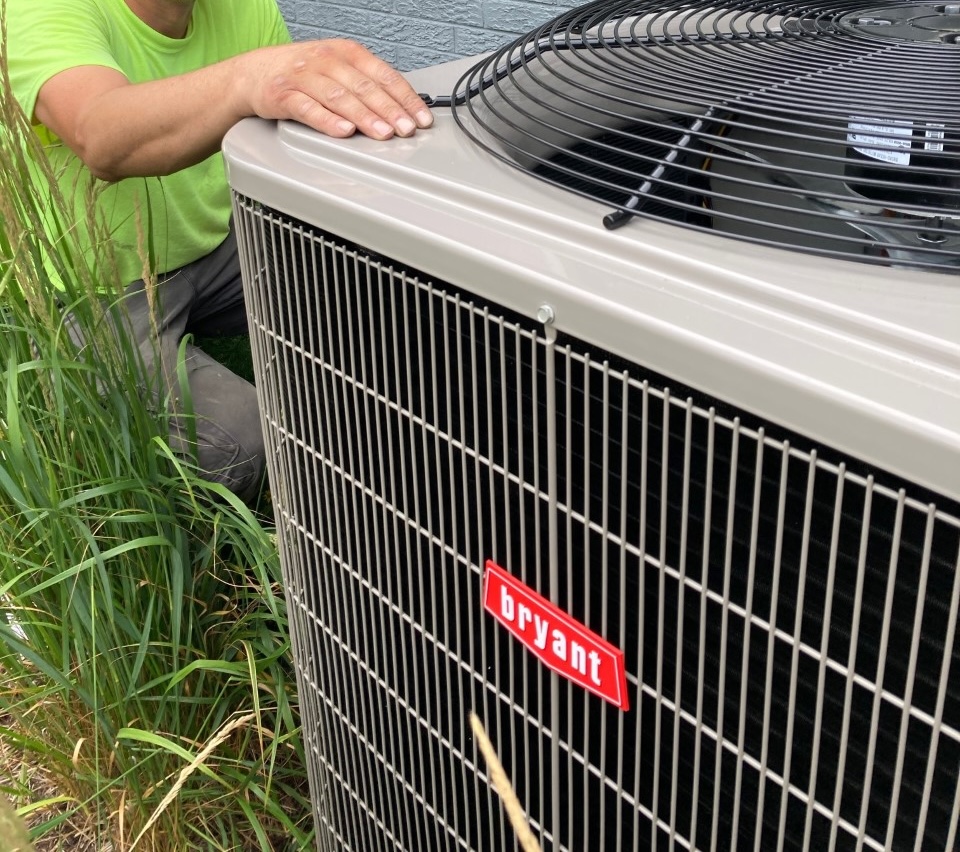
Your AC relies on the outdoor condenser to release heat pulled from inside the home. When the condenser cannot draw and release air freely, cooling efficiency can suffer.
Clear away leaves, grass clippings, weeds, and other debris that collects around the condenser. Leave enough open space for air to move freely through the coils, and look for obvious dirt buildup, bent fins, or visible damage.
Light surface debris may be easy to remove, but heavily soiled coils or damaged fins are better left to a technician. The components are fairly delicate, and aggressive cleaning can cause additional damage.
Look for Frozen Coils
Frozen evaporator coils or refrigerant lines mean heat is not moving through the AC properly. Restricted airflow is one possible cause, but low refrigerant, a blower problem, or another internal issue can also lead to freezing.
You do not need to shut down an AC simply because it is not cooling, but do turn off the cooling function if you find frozen coils, and allow them to thaw completely before restarting the system. Running the AC while the coils remain frozen can reduce circulation even further and place added strain on the equipment.
If freezing returns after the AC has thawed and the filter is clean, have the equipment inspected before continuing to run it.
Problems That Usually Require Professional AC Repair
If the thermostat, filter, outdoor unit, and visible coils all look normal but the house still is not cooling, the problem may be inside the equipment. Low refrigerant can prevent the AC from absorbing and moving heat effectively, leaving the home warmer than it should be. Because refrigerant circulates through a closed loop, low levels usually point to a leak or another service issue rather than something that should need routine refilling.
A failing electrical or mechanical component can create many of the same symptoms. A worn capacitor may keep a motor from starting correctly, while problems with the blower motor, compressor, or outdoor fan can leave the AC running without circulating air properly or removing enough heat from the home. Repeated breaker trips, unusual noises, or sudden shutdowns signal that the problem has moved beyond a basic homeowner fix.
Not every cooling issue starts with the AC itself. Leaky or disconnected ductwork can keep conditioned air from reaching parts of the house, and poor insulation lets outside heat work back in faster than the AC can remove it. Duct leaks can contribute to uneven temperatures or weak airflow in certain rooms. During stretches of hot summer weather, those weaknesses can become much more noticeable.
In some homes, the equipment may not be sized properly for the space. An undersized air conditioning system may run for long periods without reaching the desired temperature, while an oversized unit can cycle too quickly and create uneven comfort or humidity problems. If cooling has always been inconsistent, sizing or duct design may be worth evaluating rather than assuming the AC itself is failing.
Homes with heat pumps may have a different source of the cooling problem. A malfunctioning reversing valve or another internal component can prevent the unit from operating correctly in cooling mode. A professional HVAC technician can test the equipment, identify the actual cause, and recommend the appropriate repair.
When to Call Mendel Plumbing and Heating
If the AC still blows warm air after the basic troubleshooting above, schedule professional service. Recurring freezing, very weak airflow, repeated breaker trips, or unusual noises are reasons to stop troubleshooting rather than continue running the equipment.
Problems involving refrigerant, electrical components, or the compressor are difficult to diagnose safely without the right tools and training. A technician can test performance, inspect internal components, and determine whether the solution involves a repair, adjustment, or a closer look at how conditioned air is moving through the home.
Mendel Plumbing and Heating serves homeowners throughout St. Charles, Batavia, Geneva, and surrounding Fox Valley communities, with same-day service availability. Getting the AC evaluated sooner can help pinpoint the cause before the problem leads to a longer outage or more extensive repair.
Prevent Future AC Cooling Problems
Regular upkeep can help your AC perform more consistently during the hottest part of summer. Keep the outdoor unit free of leaves and debris, replace dirty filters, and pay attention to weaker output at the vents or changes in performance instead of waiting for the equipment to stop working altogether.
Seasonal maintenance covers areas homeowners cannot easily inspect themselves. Spring service can include cleaning the coils, inspecting condensate drainage, testing electrical components, and evaluating airflow before temperatures climb.
For homeowners who prefer a regular maintenance schedule, the MendelCare Plan includes twice-yearly HVAC tune-ups, priority scheduling, and discounts on services and repairs.
Get Your AC Cooling Again
Getting your AC back to normal starts with identifying why it has stopped cooling effectively. If the thermostat, filter, and outdoor unit are not the cause, continuing to run a struggling system could place additional strain on the equipment.
Mendel Plumbing and Heating can help homeowners in St. Charles, Batavia, Geneva, and surrounding Fox Valley communities find the source of the problem and get the house comfortable again. Schedule AC service when basic troubleshooting has not solved the problem, so you can get back to reliable cooling before the next stretch of hot weather.

.webp)