How Expansion Tanks Protect Water Heaters & Plumbing Systems
What Is a Water Heater Expansion Tank?
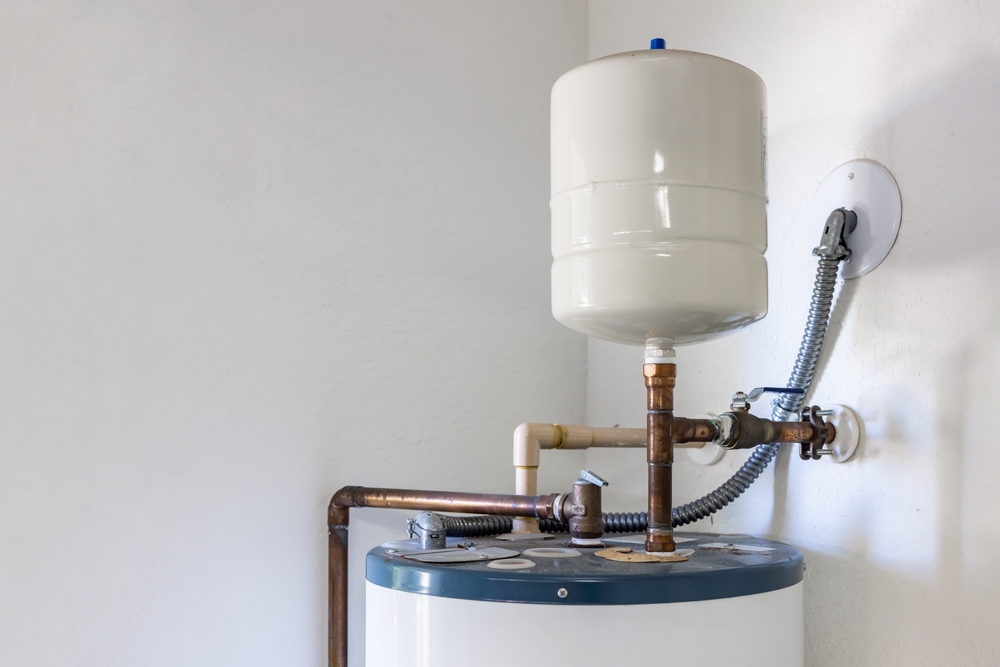
Water heater expansion tanks attach to your home’s cold water supply line on its way to the water heater. The expansion tank has a bladder or diaphragm that allows water to pass into the tank, relieving the pressure in the water heater and promoting normal operation. The decrease in pressure reduces stress on the water heater, in addition to minimizing damage to the pipes and valves from excess water pressure. Both of these advantages can help you avoid premature failure of the water heater.
The need for a water heater expansion tank often depends on the type of plumbing system you have. In an open plumbing system, expanding hot water can push back into the municipal supply line because there is no check valve or backflow preventer trapping pressure. Many homes, however, operate on closed domestic water systems where a check valve, backflow preventer, or pressure-reducing valve prevents expanded water from flowing backward. In these closed systems, thermal expansion has nowhere to go, so pressure builds inside the water heater and plumbing lines. If the expanding water volume exceeds what the tank can safely accommodate, an expansion tank absorbs that excess and helps prevent damaging pressure spikes.
Benefits of Installing an Expansion Tank
Even if you aren’t sure whether or not you need an expansion tank, there are a number of benefits to installing one. For most homeowners, the plumbing system just works without much thought or effort on your part. You might have slight issues with high water pressure and not even realize it until the flow drops significantly or your water heater fails entirely.
An expansion tank provides you with the peace of mind of knowing that the thermal expansion in plumbing pipes has somewhere to go. Installing an expansion tank can:
- Reduce stress on pipes and other equipment from over-pressurization
- Lower strain on the water heater, valves and fixtures
- Minimize the likelihood that you’ll need emergency repairs
- Reduce the chance of leaks that cause water damage
- Improve your water pressure consistency, especially if you own a home with multiple stories
- Increase compliance with local plumbing codes
A proper installation for the expansion tank can improve the lifespan of your equipment.
Do You Need an Expansion Tank?
Are you wondering, “Do I need an expansion tank?” If you have a closed-loop plumbing system, you probably have a backflow prevention device, check valve and a pressure-relief valve to handle the flow of water. You’ll know that the system isn’t working as it should when you have these high water pressure symptoms:
- Dripping faucets that you can’t seem to fix
- Hot water pressure fluctuating in the same faucet
- A leaking pressure-relief valve
If you have or are planning to build a home with closed-loop plumbing, you may be required by local building codes to install an expansion tank. If you opt for a tankless water heater, you usually don’t need an expansion tank unless your home’s water system is closed or the unit uses a recirculation/storage setup. Consult a licensed plumber to determine your plumbing configuration and make recommendations.
How to Size an Expansion Tank Correctly
Just like your water heater, you’ll need the right size for the expansion tank. A too-large tank won’t pose a problem (besides increasing the expansion tank cost), but one that is too small is more likely to fail. Most expansion tanks range from two to five gallons. The right size depends on your water heater capacity, household water pressure and water temperature.
For an accurate expansion tank sizing guide, complete the following:
- Check your water heater label
- Test your water pressure using a gauge
- Read your water heater manual for recommendations
- Check an online expansion tank calculator, like Watts Water or Amtrol
To get the right size and minimize your risk of unexpected problems, consult a plumbing professional for assistance.
Installation & Lifespan: What to Expect
With proper selection and installation, an expansion tank can last about as long as a regular water heater. Specifically, you can expect to get about five to ten years depending on the quality of the tank and the type of pressure you have in your home. Although there are some things you can do with your plumbing as a homeowner, installing an expansion tank usually requires a plumber. The installation calls for expert plumbing knowledge and may involve cutting or fitting pipes.
Some expansion tanks require almost no maintenance, while others may need you to test the pressure through the Schrader valve, like you would for your car’s tires. If you notice rust, leaks, waterlogged bladders or low water pressure, your expansion tank may be failing.
Call Mendel for Help With Expansion Tanks
If you struggle with noisy water pipes or fluctuating water pressure, you don’t have to live with the problem. Installing an expansion tank might be the best decision you could make for your home’s plumbing function and the lifespan of your water heater. At Mendel Plumbing & Heating, we provide Illinois plumbing services to homeowners in St. Charles, Naperville, Geneva and other western suburbs of Chicago. We can show you how expansion tanks work and help you determine if it’s the right choice for your plumbing system. We’re happy to inspect your plumbing system and recommend the correct tank for your needs; we have decades of experience providing reliable and courteous service.
SOURCES
- https://www.nicksplumbing.com/what-is-a-water-heater-expansion-tank/
- https://www.4abc.com/blog/what-is-the-purpose-of-a-water-heater-expansion-tank/
- https://www.abcsouthwest.com/blog/the-benefits-of-a-water-heater-expansion-tank/
- https://www.thespruce.com/water-heater-expansion-tank-information-2719063

.webp)