How to Increase the Efficiency of Air Conditioners
.webp)
When the dog days of summer arrive, homeowners often reach for the thermostat, but that can mean higher electricity bills. One way to lower costs is to ensure your AC unit runs as efficiently as possible. When components become dirty or airflow is restricted, the system may still cool the home, but overall efficiency gradually declines. As air conditioners work harder, they use more energy.
How to Increase the Efficiency of Air Conditioners Through Proper Maintenance
To understand how to increase air conditioner efficiency, it helps to know that you are not truly “boosting” efficiency but helping the system operate closer to its designed seasonal energy efficiency ratio (SEER) set by the manufacturer. There are some things you can do yourself, and others you should leave to a licensed HVAC technician. Regular maintenance from both you and a technician helps improve AC performance. With a few simple tasks, homeowners can reduce AC energy use, maintain comfort, and often lower cooling costs in summer.
For peak AC efficiency, follow this AC maintenance checklist:
- Change the air filter regularly. How often should you change AC filters? Try changing it every 1–3 months (or monthly if you have shedding pets or people with allergies or sensitivities).
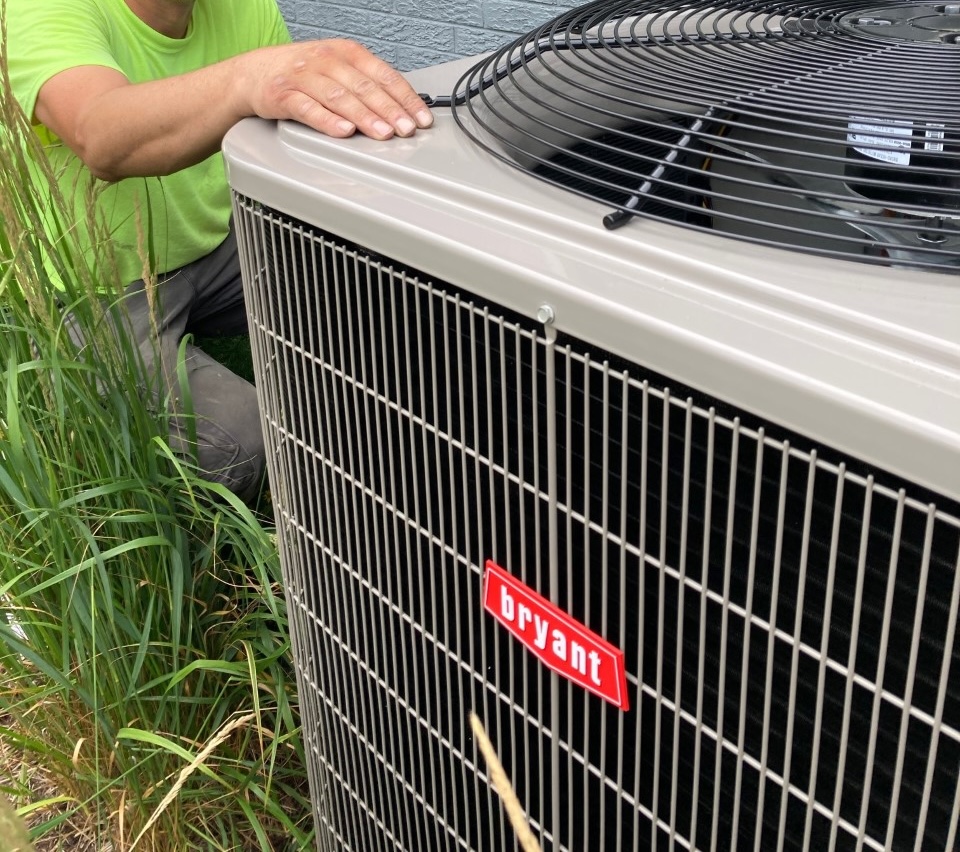
- Clean around the outdoor unit. The outdoor system contains the condenser coil, which releases heat pulled from inside the home. When dirt, leaves, or grass clippings build up around this coil, the system cannot release heat as effectively.
- Schedule regular air conditioner tune-ups by calling a technician once a year, ideally in the spring.
How Thermostat Settings and Controls Affect Air Conditioner Efficiency
Maintenance is not the only factor affecting AC efficiency. Your thermostat can also help (or hurt) air conditioning efficiency.
Many homeowners assume that lowering the thermostat by a lot will cool the home faster. In reality, air conditioners cool at a steady rate. Two important concepts are the setpoint (the temperature you select on the thermostat) and runtime (how long the system must run to reach that temperature). A lower setpoint doesn’t cool the house any faster. It just makes the system run longer. For better runtime optimization, always use a reasonable setpoint.
Even better, get a programmable thermostat so you can set it and forget it. You can dial in setpoints to occur automatically when the home is empty in the day or you’re asleep at night.
Another important thing to remember is thermostat placement. Keep your thermostat away from windows, direct sunlight, or appliances that produce heat. Otherwise, it may detect temperatures that are warmer than the rest of the house.
Improving Airflow and Duct Performance
How hard your AC system works depends a lot on airflow. Airflow problems can include blocked vents, furniture placed over registers, or dust buildup on grilles. Homeowners should occasionally check supply and return vents to ensure they are open and clean.
However, airflow issues are not always visible. In many homes, especially older ones, problems may exist within the duct system itself. One common issue is duct leakage. Small gaps or cracks in ductwork allow cooled air to escape before it reaches the living space. When conditioned air leaks into attics, crawlspaces, or walls, the system must run longer to maintain indoor comfort. In this case, your best option could be professional help. Professionals can diagnose problems that may not be visible to homeowners.
Sealing ducts and improving insulation can help deliver cooled air more efficiently. These improvements do not increase the cooling capacity of the system, but they help the equipment perform closer to its ideal energy efficiency ratio.
Addressing duct issues is an important step for homeowners looking for practical cooling system efficiency tips that improve comfort and reduce wasted energy.
Reducing Heat Gain Inside the Home
Another effective way to improve efficiency is to reduce indoor heat gain. When additional heat enters the home, it increases the “cooling load,” meaning HVAC systems must work harder to remove that heat. One of the most common causes of heat gain is sunlight entering through windows. Air leaks around windows and doors are another big cause of heat gain. Even cooking with ovens, running clothes dryers, and using other heat-producing appliances can spike indoor temperatures.
To reduce heat buildup:
- Close blinds or curtains during the hottest part of the day
- Seal gaps around windows and doors
- Avoid turning on the oven or using the dryer in the heat of the afternoon
- Use a ceiling fan to help circulate air
Reducing heat buildup inside the home allows the air conditioner to maintain comfort with less runtime, which supports better AC efficiency.
When Professional Service Helps Increase Efficiency Long-Term
While homeowners can handle many maintenance tasks themselves, professional inspections and tune-ups top the list of summer AC maintenance tips. During annual cooling services visits, technicians can inspect things like refrigerant levels, electrical connections, and internal components. These elements can all affect efficiency if problems develop, especially as systems age. A professional inspection is important if your AC is working overtime.
Signs your AC is working too hard include:
- Rising energy bills
- Uneven cooling
- Longer run times during moderate temperatures
Get a professional tune-up now so you can potentially avoid a costly air conditioning repair later.
For homeowners in Illinois, Mendel Plumbing and Heating is a local expert for professional AC inspections, maintenance, and efficiency evaluations. Preventive care through MendelCare maintenance plans helps ensure systems receive regular inspections and tune-ups throughout the year.
Contact us to schedule a seasonal inspection and keep your system running as designed.

.webp)